.Logovectorized-865d7cf8b07c278e7b825d8e956c1f2c32ea62d2acb7421b55aa2737ce39bbf6.png)
Florida Beach Flag Meanings & Beach Safety Guide: What Every Visitor Should Know


Florida's beaches are famous for warm Gulf waters, beautiful sand, sunshine, wildlife, and incredible sunsets. But before you head into the water, there's one important thing every visitor should understand:
The beach warning flags.
If you're visiting Clearwater Beach, St. Pete Beach, Treasure Island, Madeira Beach, Indian Rocks Beach, Pass-a-Grille, or another Florida beach, you may see colored flags posted near lifeguard stations or beach entrances.
Those colors aren't decorations.
They communicate important information about current water conditions and potential hazards.
Understanding what Florida beach warning flags mean, knowing how to recognize dangerous currents, watching the weather, and following basic water-safety practices can help you make better decisions during your Florida beach vacation.
Here's what every beach visitor should know.
What Do the Beach Flags Mean in Florida?


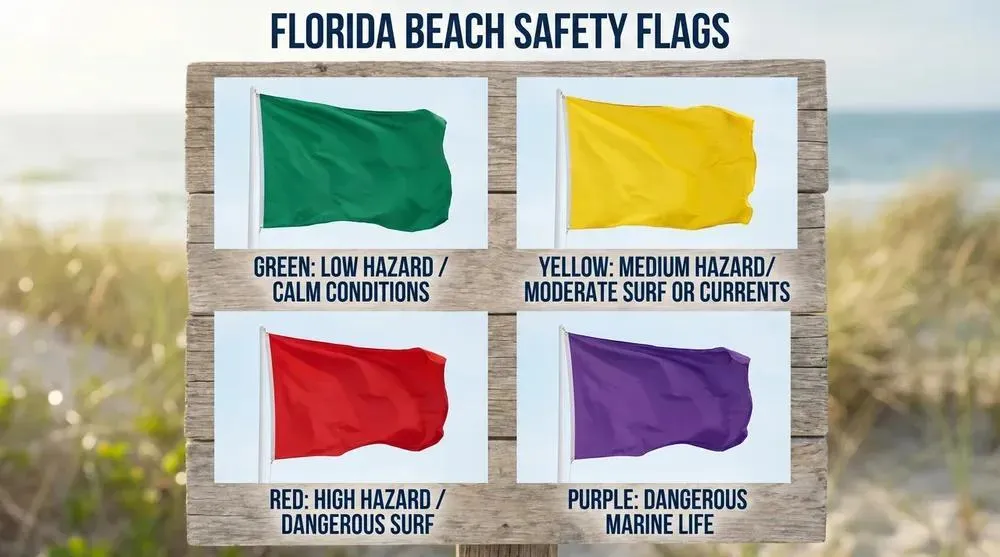
Florida uses a standardized beach warning flag system to help beachgoers understand surf and water conditions.
The system uses green, yellow, red, double red, and purple flags.
Here's what each one means.
🟢 Green Flag: Low Hazard
A green flag means conditions present a low hazard.
That doesn't mean the water is completely risk-free.
The ocean and Gulf are natural environments, and conditions can change. Swimmers should still use good judgment, supervise children closely, and pay attention to lifeguards and local advisories.
Think of green as:
Lower risk—not zero risk.
🟡 Yellow Flag: Medium Hazard
A yellow flag indicates a medium hazard, including moderate surf and/or currents.
Swimmers should use additional caution.
Children, inexperienced swimmers, and anyone uncomfortable in moving water should be particularly careful.
If you're unsure about conditions, ask a lifeguard before entering the water.
🔴 Red Flag: High Hazard
A single red flag indicates a high hazard, including high surf and/or strong currents.
This is a significant warning.
Swimming conditions may be dangerous, particularly for inexperienced swimmers.
Don't treat a red flag as a challenge.
Pay attention to lifeguard instructions and seriously reconsider entering the water.
There's nothing wrong with turning a swimming day into a chairs-under-the-umbrella day.
The Gulf will still be there tomorrow.
🔴🔴 Double Red Flags: Water Closed to the Public
Double red flags mean the water is closed to the public.
Do not enter the water.
Closures may occur because conditions are considered unsafe.
If double red flags are flying, enjoy the beach from the sand and wait until authorities reopen the water.
🟣 Purple Flag: Dangerous Marine Life
A purple flag indicates dangerous marine life.
That doesn't automatically mean there's a shark swimming next to the beach.
Purple flags may be used when potentially hazardous marine life is present.
If you see one, check posted information or ask a lifeguard what conditions have prompted the warning.
Can More Than One Flag Be Flying?
Yes.
You may see a purple flag alongside another color.
For example, a beach could display a yellow flag and purple flag at the same time.
That would indicate both moderate surf/current conditions and a marine-life concern.
Always consider all posted warnings, not just one flag.
No Flag Doesn't Mean No Danger
This is particularly important for visitors.
Not every Florida beach has a lifeguard station or warning flag posted directly in front of where you're sitting.
If you don't see a flag, don't assume conditions are automatically safe.
Check current local beach conditions before entering the water and observe what's happening around you.
When possible, swimming near a staffed lifeguard area can provide an additional layer of safety.
What Are Rip Currents?


Rip currents are one of the most important beach hazards to understand.
A rip current is a powerful, narrow channel of water moving away from shore.
They can occur along beaches with breaking waves and can move even strong swimmers away from the beach.
One of the biggest mistakes someone can make is trying to overpower the current by swimming directly against it toward shore.
That can quickly lead to exhaustion.
What Should You Do If You're Caught in a Rip Current?
The National Weather Service recommends that if you're caught in a rip current, you should stay calm and don't fight the current.
Swim parallel to the shoreline to escape the current, then swim toward shore at an angle away from it. If you cannot escape, float or tread water and call or wave for help.
Remember:
Don't fight the current.
Trying to swim directly against a powerful current can exhaust you.
What If You See Someone Else Caught in a Rip Current?
Your first instinct may be to immediately swim after them.
That can put two people in danger instead of one.
Alert a lifeguard or call for emergency assistance.
If appropriate flotation equipment is available and can be safely provided from shore, that may help—but don't put yourself into a dangerous current unless you're properly trained to perform a water rescue.
Swim Near Lifeguards When Possible
One of the simplest ways to improve beach safety is to swim near a staffed lifeguard area when one is available.
Lifeguards monitor changing conditions and can provide information about current hazards.
If you have questions about:
- Currents
- Waves
- Marine life
- Swimming areas
- Weather
- Beach flags
Ask them.
That's what they're there for.
Children Require Constant Supervision


Children should be actively supervised whenever they're near the water.
Don't assume that because the Gulf looks calm, children are automatically safe.
Conditions can change, waves can knock children over, and currents can move swimmers away from where they entered.
Young children and inexperienced swimmers should remain within close reach of a responsible adult.
Appropriate flotation equipment may provide additional protection depending on the child's size, age, swimming ability, and activity—but it should never replace active supervision.
Know Your Swimming Ability
A Florida vacation isn't the time to overestimate your swimming ability.
Swimming in open water is different from swimming in a pool.
You may encounter:
- Waves
- Currents
- Changing depths
- Uneven footing
- Marine life
- Reduced visibility
- Wind
- Fatigue
If you're not a confident swimmer, stay in shallower water and consider remaining near a lifeguarded area.
And never swim alone.
Don't Swim During Thunderstorms
Florida is famous for sunshine.
It's also famous for thunderstorms.
Weather can change surprisingly quickly, particularly during warmer months.
If you hear thunder, get out of the water and leave the exposed beach area for appropriate shelter.
Lightning can strike far from the center of a storm, so don't wait until rain is directly overhead.
A good rule to remember:
When thunder roars, go indoors.
Florida Heat Is a Beach Safety Issue Too
Not every beach hazard is in the water.
Florida's heat and sunshine can create problems of their own.
Long periods in direct sunlight can contribute to sunburn, dehydration, heat exhaustion, and other heat-related illnesses.
Bring:
- Plenty of drinking water
- Sunscreen
- Sunglasses
- Hat
- Appropriate clothing
- Shade
Take regular breaks from direct sunshine, particularly during long beach days.
Shade Can Make a Long Beach Day More Comfortable

A beach umbrella, cabana, or sun shelter gives your group somewhere to take breaks from direct sunlight.
This can be especially useful for families spending several hours outside.
If you're visiting Pinellas County and don't want to travel with bulky beach equipment, Dolphin King Beach Equipment Rentals offers chairs, umbrellas, cabanas, sun shelters, coolers, wagons, safety equipment, games, and other beach accessories.
You can browse all Dolphin King beach rental equipment and reserve what you need for a single beach day or multiple days.
Dolphin King also provides FREE delivery and pickup throughout our Pinellas County service area to hotels, Airbnbs, condos, vacation rentals, residences, and other approved locations.
Consider a Beach Bundle
If you're planning a full family beach day, you may need several pieces of equipment.
Dolphin King's Beach Bundles combine popular beach essentials into convenient packages for couples, families, and groups.
Depending on the bundle, you can combine equipment such as chairs, umbrellas, cabanas, sun shelters, coolers, blankets, tables, games, and other accessories.
All Dolphin King Beach Bundles are discounted 10% compared with renting the included equipment individually.
Secure Your Beach Umbrella
Beach umbrellas provide valuable shade, but they need to be properly secured.
Never simply push an umbrella a few inches into the sand and assume it's safe.
Use an appropriate anchor, install the umbrella correctly, and pay attention to wind conditions.
If winds become strong, take the umbrella down.
The same applies to cabanas, tents, and sun shelters.
Don't leave shade equipment unattended in windy or stormy conditions.
Stay Hydrated
Bring more drinking water than you think you'll need.
This is particularly important if you're spending several hours outside.
Children may also need reminders to drink regularly because they can become distracted while playing.
A wheeled cooler filled with cold water and other appropriate drinks makes staying hydrated much easier during a full beach day.
Protect Yourself From the Sun
Apply broad-spectrum sunscreen before heading outside and reapply according to the product's directions.
Don't forget:
- Face
- Ears
- Neck
- Shoulders
- Tops of feet
- Back
- Scalp or hairline
Shade, hats, sunglasses, and protective clothing can provide additional protection.
Cloudy weather doesn't mean you can ignore sun protection.
Be Careful With Alcohol Around Water
Alcohol can impair judgment, coordination, and reaction time.
If you're drinking during your vacation, understand the local beach rules and be especially cautious around the water.
Some Pinellas County beaches prohibit alcohol entirely, while regulations can vary by location.
Never assume the rules at one beach apply to another.
Watch for Marine Life


Florida's coastal wildlife is one of the things that makes visiting the beach so interesting.
You may encounter dolphins, fish, rays, jellyfish, shorebirds, sea turtles, and other animals.
Enjoy wildlife from a respectful distance.
Never intentionally touch, chase, feed, or harass wild animals.
If a purple flag is posted, check with lifeguards or local authorities about the current marine-life concern.
The "Stingray Shuffle"
When stingrays are present in shallow Gulf waters, you've probably heard locals mention the stingray shuffle.
Instead of taking large steps and potentially stepping directly onto a ray resting in the sand, shuffle your feet along the bottom.
The disturbance can give nearby rays an opportunity to move away.
It's simple, costs nothing, and is a useful Gulf Coast habit to remember.
Respect Sea Turtle Nesting Areas
Sea turtles nest along Florida's beaches, and Pinellas County's shoreline provides important nesting habitat.
If you see a marked nest:
Give it space.
Don't move markers, dig around the nest, place equipment inside protected areas, or allow children to play on or around it.
If you're walking the beach at night during nesting season, avoid disturbing turtles and follow local lighting regulations.
Don't Dig Dangerous Holes in the Sand
Digging in the sand is a classic beach activity, especially for children.
But large, deep holes can become dangerous.
They can collapse, injure beachgoers, create obstacles for emergency vehicles, and interfere with nesting sea turtles.
Keep sand holes reasonable, supervise children, and fill them in completely before leaving the beach.
Don't Leave Equipment Behind Overnight
Chairs, umbrellas, tents, toys, and other equipment shouldn't be abandoned on the beach.
Besides creating litter and obstacles, equipment can interfere with wildlife and beach maintenance.
Pack out everything you bring.
With Dolphin King's rental service, we'll coordinate pickup according to your scheduled rental period so you don't have to figure out what to do with bulky equipment when your vacation ends.
Know the Rules of the Beach You're Visiting
Pinellas County includes numerous municipalities and parks, and beach regulations aren't necessarily identical everywhere.
Rules may differ regarding:
- Alcohol
- Pets
- Smoking
- Fishing
- Fires
- Camping
- Tents and canopies
- Sports
- Skimboards
- Watercraft
- Parking
Before visiting a beach, check current rules for that specific location and follow posted signage.
Full Beach Setup & Breakdown Service
Want to spend less time carrying and arranging beach equipment?
Dolphin King offers an optional Full Beach Setup & Breakdown Service at eligible beach locations.
We'll prepare your reserved equipment for your beach day and return at your scheduled end time to break it down.
Besides being convenient, having your shade equipment properly set up means one less thing to think about when arriving at the beach.
You still need to monitor weather and wind conditions throughout the day and take appropriate action if conditions change.
You enjoy the beach. We'll handle the gear.
A Quick Florida Beach Safety Checklist
Before heading to the sand, ask yourself:
What's the weather forecast?
What color are the beach flags?
Are there lifeguards nearby?
Do we have enough drinking water?
Do we have sunscreen and shade?
Does everyone understand basic water safety?
Are children being actively supervised?
Are there any marine-life warnings?
Do we know the rules for this particular beach?
Taking a couple of minutes to answer those questions can make your beach day safer and more enjoyable.
Help Keep Pinellas County's Beaches Safe & Beautiful


Beach safety also means taking care of the environment you're enjoying.
Dispose of trash properly.
Don't leave equipment behind.
Respect wildlife.
Stay away from protected nesting areas.
Fill in holes before leaving.
And if you see a small piece of safe-to-handle litter nearby, consider picking it up.
At Dolphin King, protecting the beaches that make our business possible is an important part of what we do.
That's why 5% of all Dolphin King proceeds benefit Keep Pinellas Beautiful, a local nonprofit dedicated to conserving and beautifying our natural environment through community engagement and education.
A safer beach and a cleaner beach benefit everyone.
Enjoy Florida's Beaches Safely
Florida's Gulf Coast beaches are incredible places to swim, relax, explore, play, and spend time with family and friends.
But they're still natural environments.
Conditions change.
Weather changes.
Currents change.
Wildlife moves through the area.
The best beachgoers aren't afraid of those things—they're simply aware of them.
Learn the beach warning flags.
Pay attention to lifeguards.
Respect the water.
Watch the weather.
Protect yourself from the sun.
Supervise children.
Respect wildlife.
And when conditions aren't safe for swimming, grab a chair, find some shade, and enjoy the Gulf from the sand.
There will always be another opportunity to get in the water.
🐬 Dolphin King Beach Equipment Rentals
Browse All Beach Rental Equipment | View Beach Bundles
FREE Delivery & Pickup | Single & Multi-Day Rentals | Optional Full Setup & Breakdown
Rent local. Enjoy the beach. Help Keep Pinellas Beautiful.